 Coffee 101
October 12, 2026 6 min
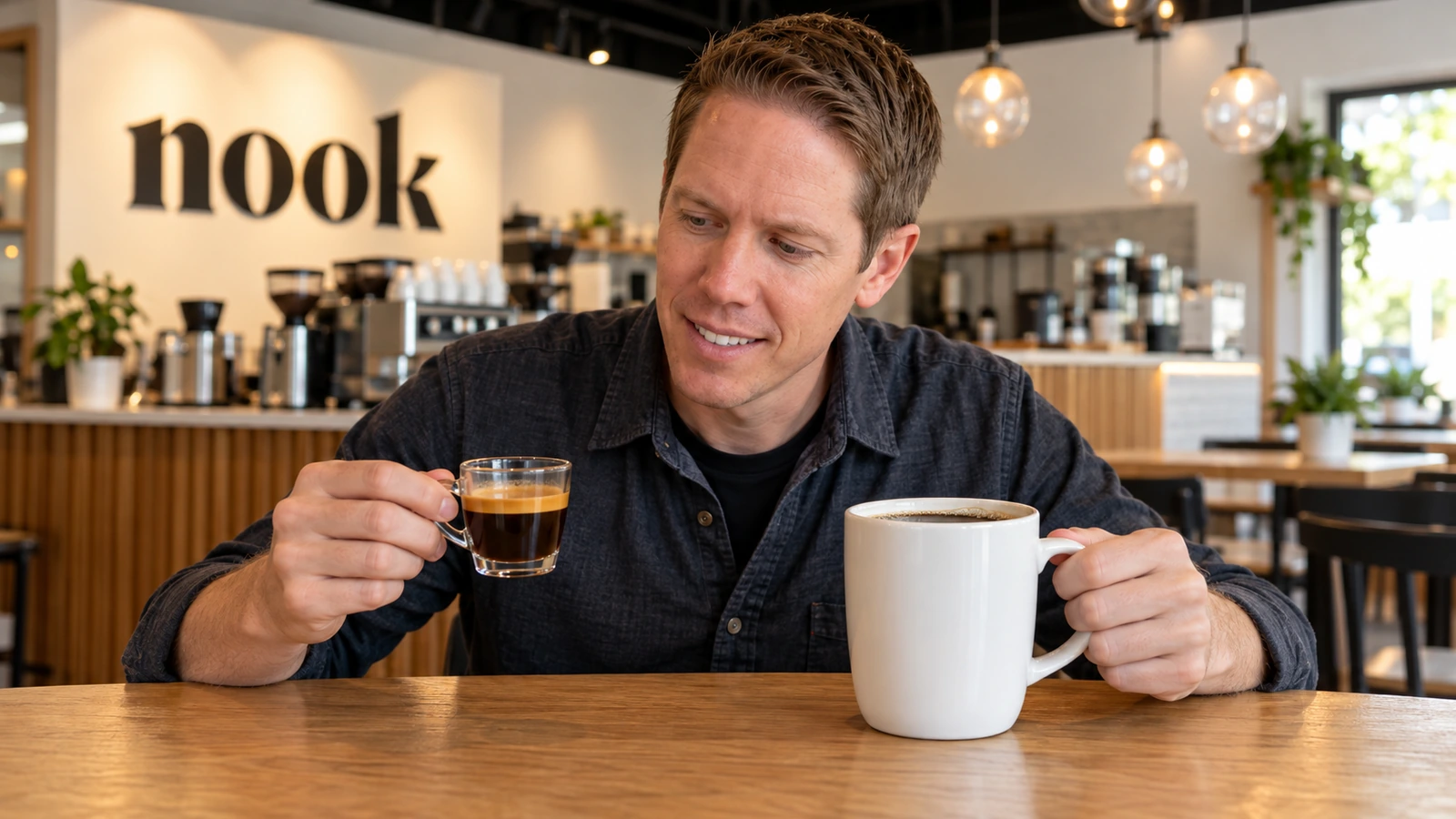
Caffeine Content: Espresso vs. Drip Coffee
Espresso tastes stronger, but does it have more caffeine than a cup of drip? It depends on how you measure.
Read article

Temperature and pressure decide how much flavor ends up in your cup. Here's why they matter.
It goes without saying that heat and pressure are needed in brewing coffee. Pressure is needed to push water through ground coffee beans in order to extract the flavor. Heat is needed to mix together ground coffee beans and water in order to produce some coffee. Since these are facts, we find it odd that many (if not most) of us know little of the differences in the heat- and pressure-generating capacities of the various coffeemakers currently available in the market. To prove that it’s important to generate the required heat and pressure during the coffee brewing process, we’ll begin by explaining how espresso is different from regular coffee.
To be sure, regular coffee isn’t a kind of coffee. By regular coffee we mean plain coffee. There are various types of coffee because there are different coffee-brewing methods. For instance: In order to turn it into espresso, coffee must be brewed for a maximum of 25 seconds between 195–205F at around 9 bars of pressure. If you don’t meet these requirements, there’s no guaranteeing you’ll be able to make proper espresso.
“Get the heat and pressure right, and the coffee does the rest.”
In order to help even regular people, like you and we, easily prepare our favorite types of coffee ourselves right in the comfort of our homes, the coffeemakers currently available in the market now enable us to accurately control the temperature and that can generate the required pressure themselves.
Coffeemakers now enable users to control the temperature by way of the two heating technologies these machines utilize. These heating technologies are the two-boiler system and the thermoblock system.
Also called dual-boiler machines, coffee machines that come with two-boiler systems enable users to simultaneously brew coffee and steam or froth milk. These machines are able to do so by way of the built-in boiler that is dedicated to heating water to the required temperature and the other built-in boiler dedicated to generating the steam needed to steam or froth milk.
Apart from being able to prepare coffee fast, coffee machines that come with two-boiler systems are sure to give you accurate control over the temperature. Such convenience and precision, unfortunately, make most (if not all) of these machines expensive.
A coffee machine with a thermoblock doesn't keep a boiler hot at all. It heats water on demand as it flows through a heated metal block, so it warms up fast, but most thermoblock machines can't brew and steam at the same time. They utilize only one system for generating heat and pressure. Due to this, they can’t consistently generate the required heat and pressure. To solve these problems, there are now commercially available coffeemakers that come with a thermoblock system, a grouphead, and a heat exchanger.
The group head, the heavy metal fitting the portafilter locks into, acts as a heat sink that keeps brew water stable. Commercial-style group heads hold temperature very well, but on some machines they can run too hot after long idle periods, so baristas flush a little water before pulling a shot.
A heat exchanger is basically a coiled tube. It connects together the water reservoir, the grouphead, and the boiler. As it passes through the boiler, water gets heated to the required temperature; enabling the coffeemaker to simultaneously brew and steam. While useful, heat exchangers tend to scale.
If you’re an old-school kind of person, we won’t stop you from choosing one of the moka pots and steam coffee machines currently available in the market for your own use. But these coffeemakers usually come with neither groupheads nor heat exchangers, as they are designed to be used manually. So, although they are simple to use, the coffeemakers give you the least control over the temperature and the pressure among all of the coffeemakers currently available in the market. As such, there’s no guaranteeing the aforementioned coffeemakers can prepare coffee as effectively as the others.
Given how important it is to generate the required temperature and pressure during the coffee brewing process, we hope you’ll find a coffeemaker that can indeed; enabling you to enjoy your favorite cup of coffee even more.