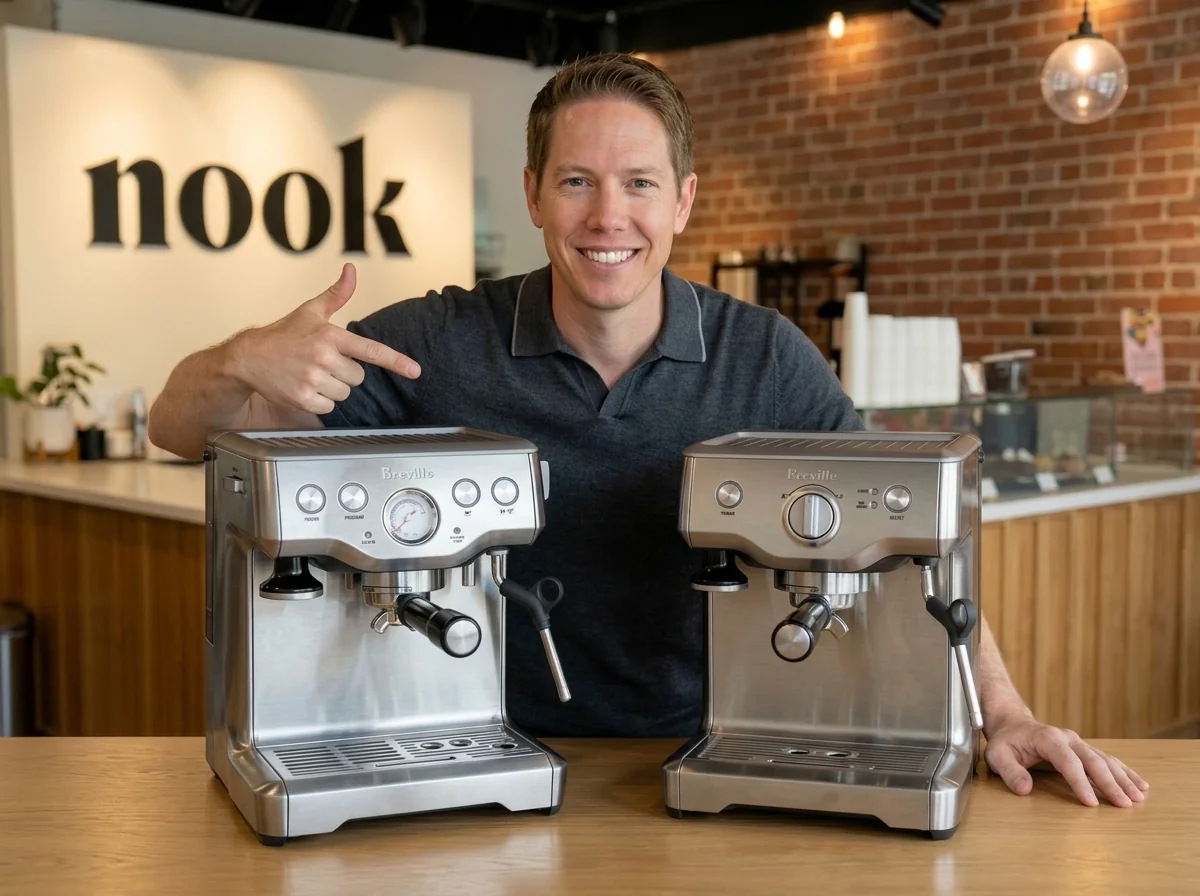
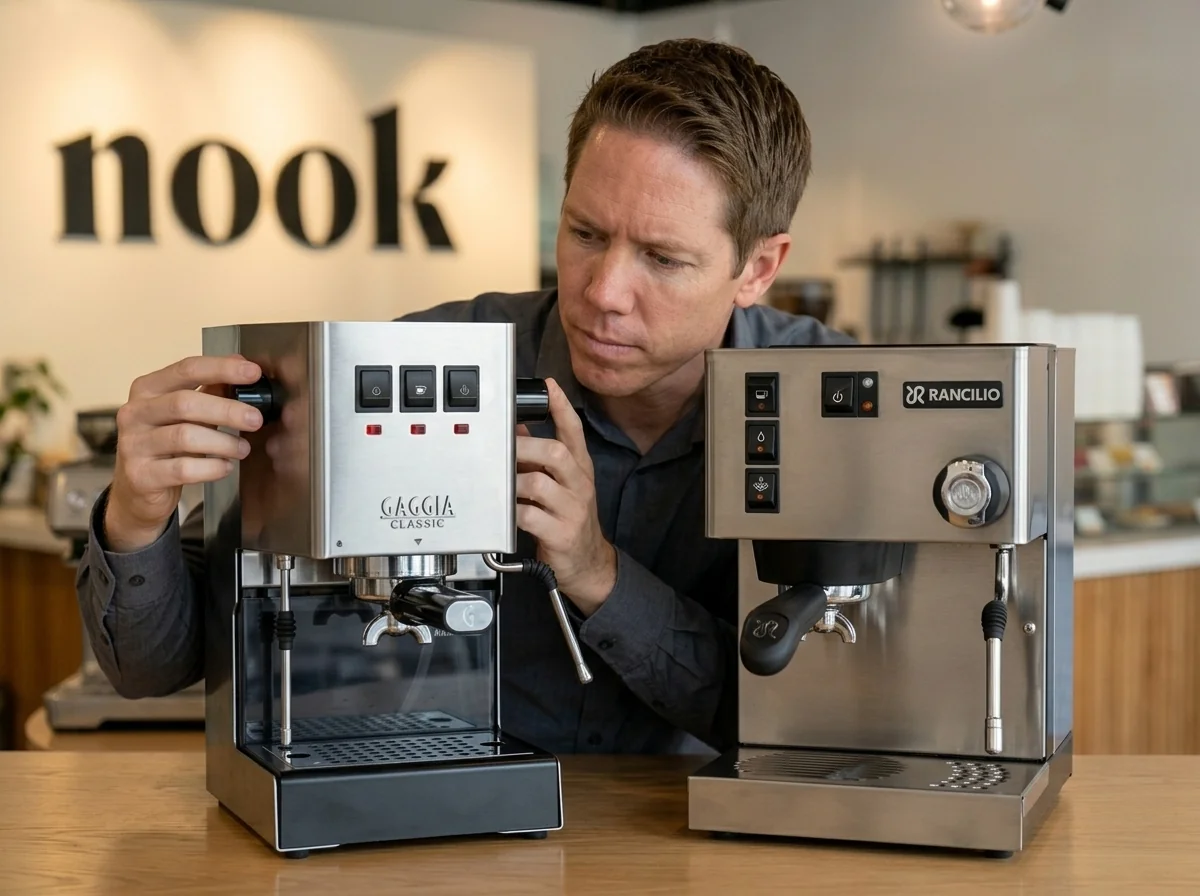
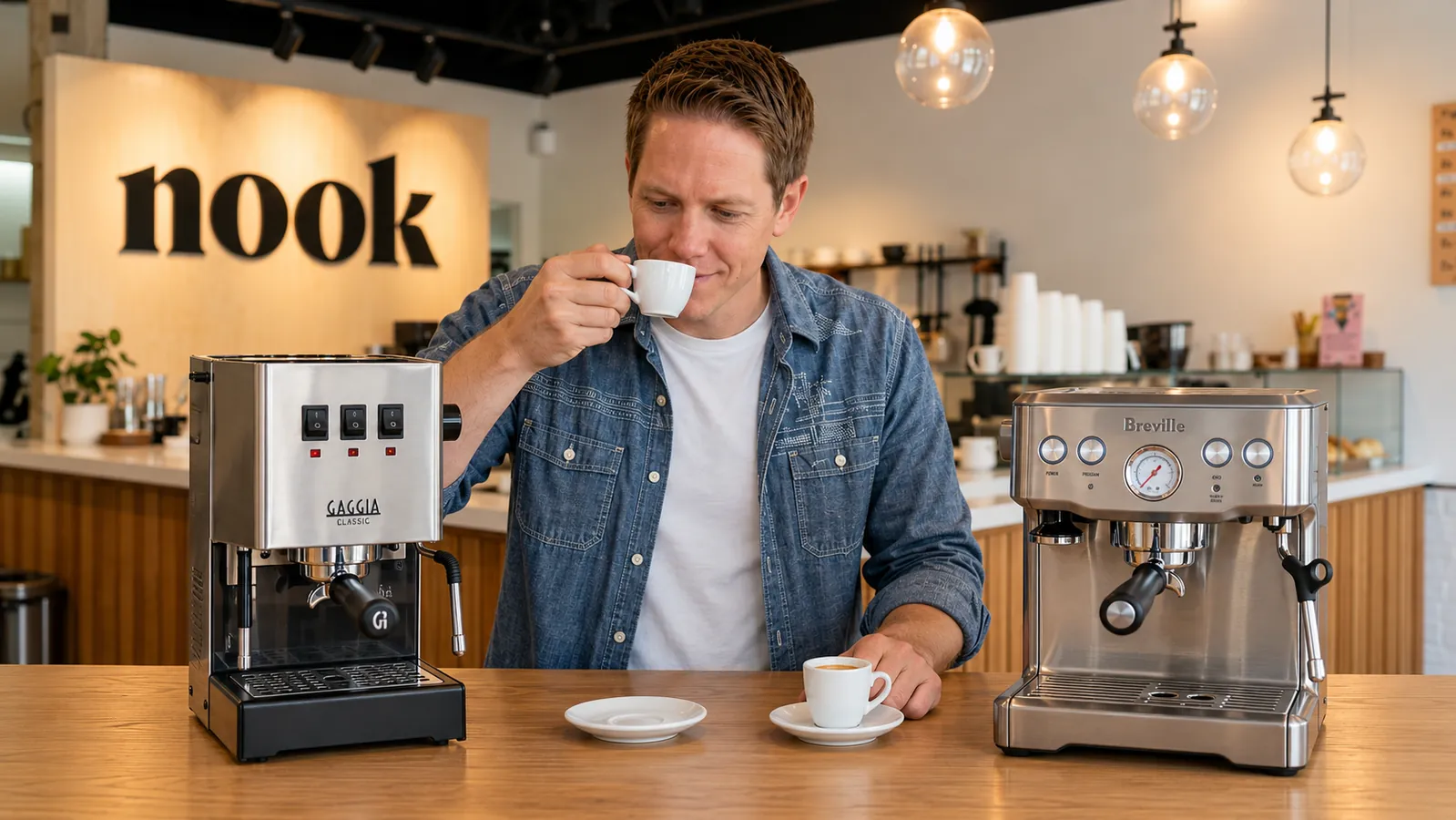
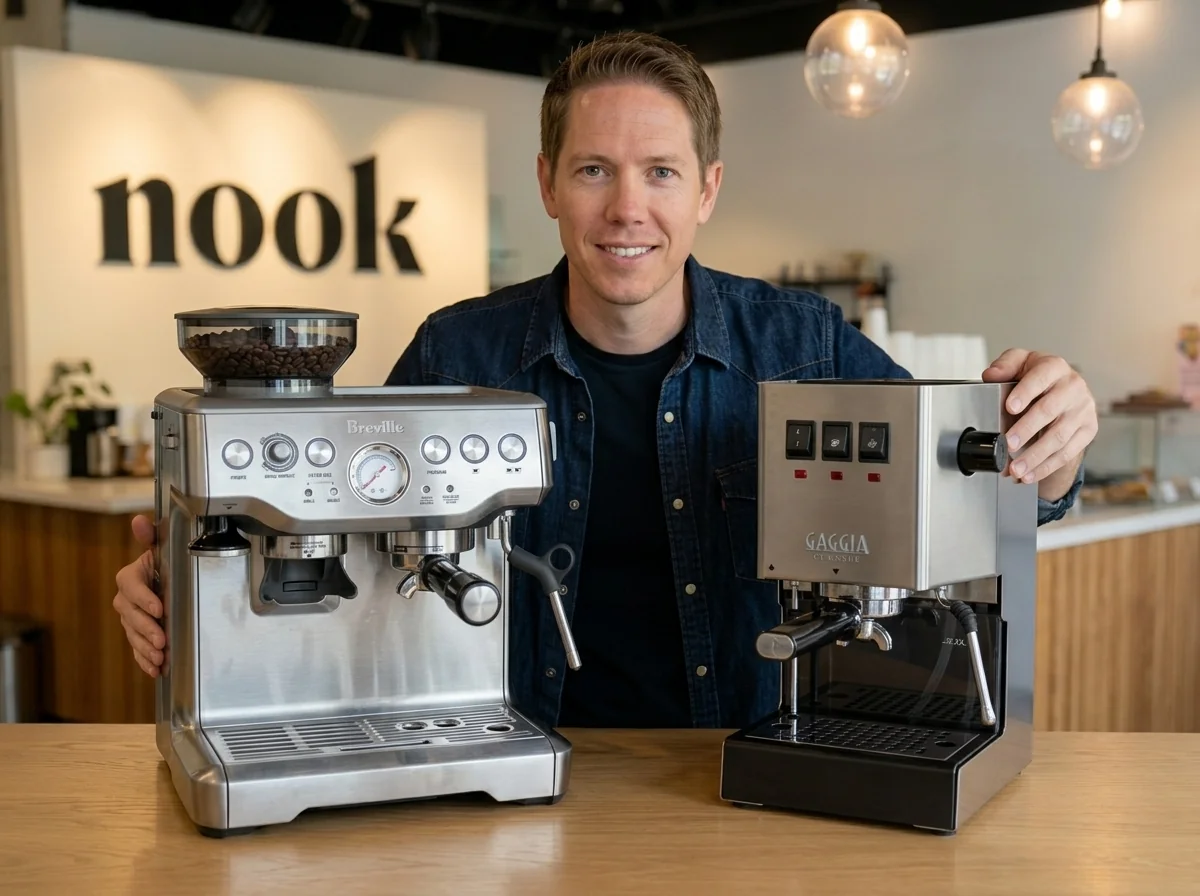
Two of the most popular semi-automatic espresso machines under the prosumer tier go head to head: the classic Italian Gaggia Classic Evo Pro and the tech-forward Breville Infuser.
For the newbie home brewers among us, a semi-automatic espresso machine requires you to do some of the work to get the perfect shot.
You’ll have to tamp the beans, monitor the extraction and froth the milk. For both machines in our match-up, you will also need to grind the beans yourself using a separate grinder.
It's a little more effort, but semi-automatic machines give you much more control over your drink. With a little practice, you'll master the basics; our guide on how to make great espresso at home is a good place to start.
- 2026 update: The Gaggia Classic is now sold as the Gaggia Classic Evo Pro, which replaced the old Pannarello wand with a commercial-style steam wand and ships with a 9-bar pressure setting. This comparison reflects the current model.
- The Final Shot: The Breville Infuser is our pick for beginners, thanks to PID temperature control, pre-infusion, a pressure gauge and programmable shots. The Gaggia Classic Evo Pro is the better choice for hobbyists who want a commercial 58mm portafilter, a powerful steam wand and a simple, highly upgradable machine.
It doesn’t take long to acclimate to the process and before you know it, you’ll be brewing a latte to rival even the snobbiest baristas.
We’ve selected a pair of the most popular and best regarded machines, the Gaggia Classic and Breville Infuser, and reviewed them head to head to parse out which is the best option.
You’ll want to be sitting down for this, so grab a cup of coffee. I’ll wait right here.
Breville Infuser vs. Gaggia Classic Head to Head
Similarities
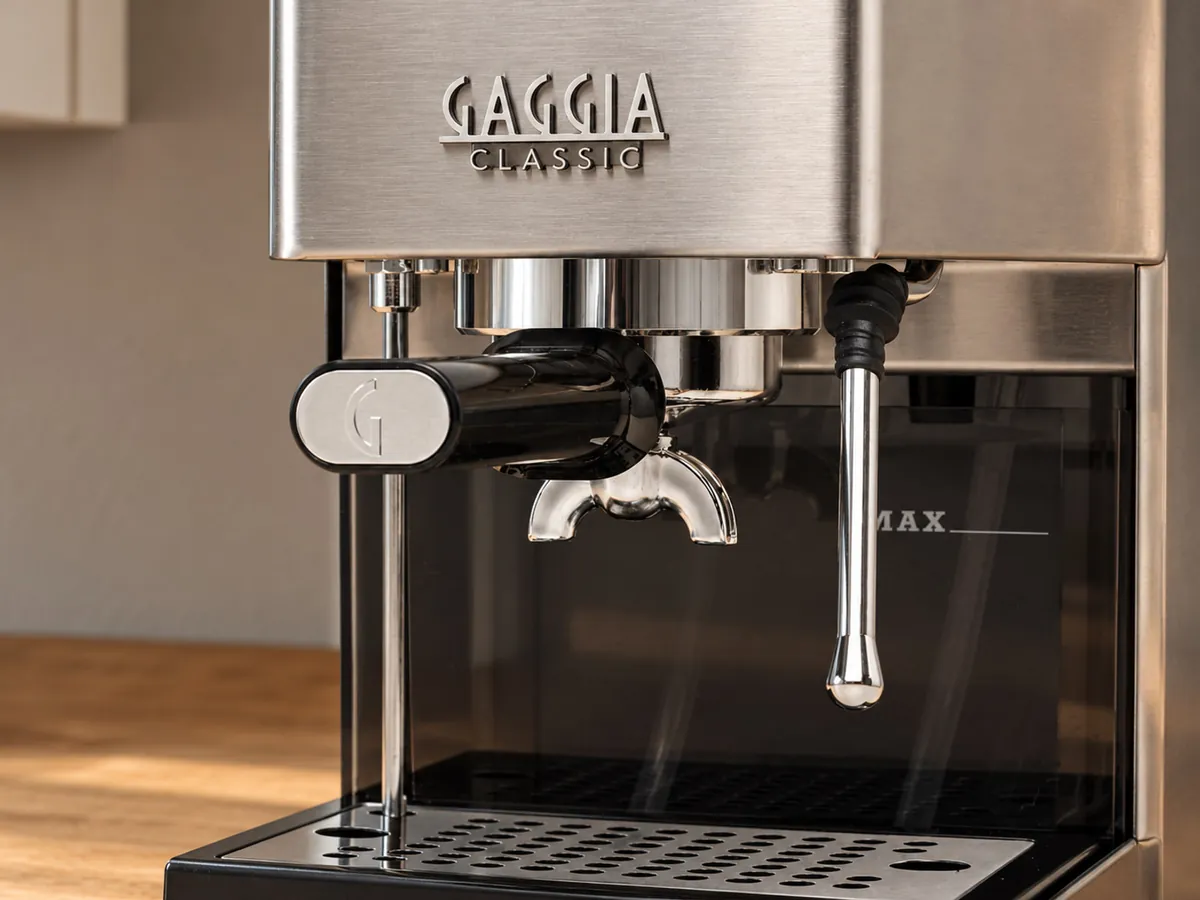
Both the Breville Infuser and Gaggia Classic Evo Pro are high-quality semi-automatic espresso machines in a similar price range, and both are highly rated by owners.
One of the best features that the two machines share is a 3-way solenoid valve for dry puck extraction. The puck is the ground coffee inside the portafilter, and the drier it is, the easier it is to knock out. With both machines, you can brew, tamp, rinse and be done with your cleaning tasks.
Both machines have large removable water tanks: about 61 ounces on the Breville and 72 ounces on the Gaggia.
Neither includes a built-in grinder, so if you plan to brew freshly-ground whole beans, you’ll have to purchase a separate one.
Both machines can also dispense hot water for tea or an Americano: the Breville from a dedicated spout, the Gaggia through its steam wand. Both have swiveling steam wands for lattes and cappuccinos.
Shared Features:
- Dry Puck Extraction
- Removeable Water Tank
- Cup Warmer
- Steam Wand
- Water Dispenser
- Uses Ground Coffee
Differences
Temperature Regulation
The Breville Infuser features an advanced thermocoil system for heating the water, this technology pumps the water through a heated coil for maximum heat consistency. It also uses PID technology to regulate the temperature for perfect flavor extraction.
The Gaggia Classic Evo Pro does not use PID. Its heavy chrome-plated brass group head and portafilter help stabilize temperature, and many owners "temperature surf" or add an aftermarket PID kit.
Automatic Indicators
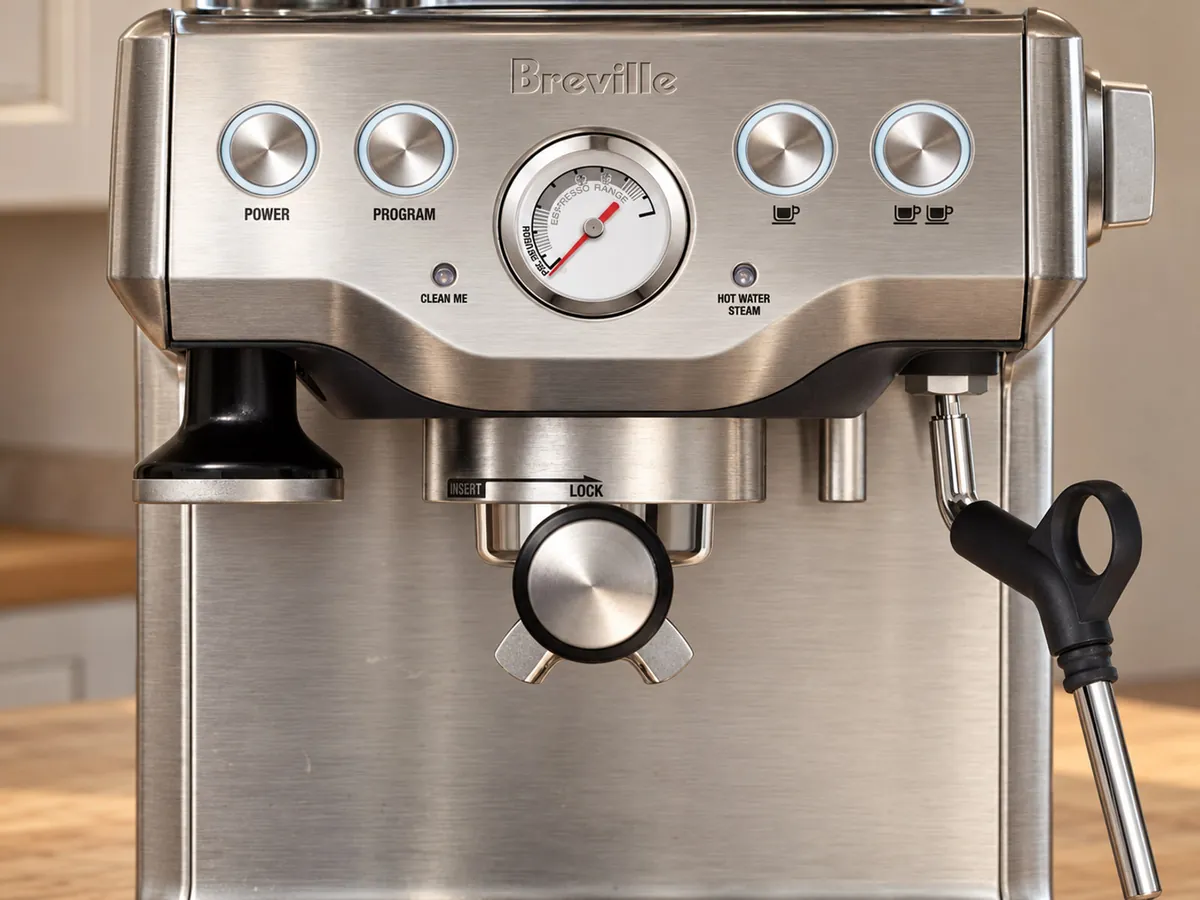
If you like the convenience of automatic reminders to clean parts of your espresso machine, the Breville Infuser will indicate when it needs to be cleaned and when to empty the drip tray with light up buttons on the front of the machine.
The Gaggia Classic does not have any automatic indicators, but you can easily schedule routine cleaning tasks with a calendar or reminder on your phone.
Steam Wand
Older Gaggia Classics used a plastic Pannarello wand, which is easy for beginners but limits control. The Classic Evo Pro now has a commercial-style, two-hole stainless steel wand that produces genuine microfoam for latte art, and it's quite powerful for its size.
The Breville Infuser also has a stainless steel steam wand. It's capable and easy to clean, though less powerful than the Gaggia's. Its advantage is speed: it automatically purges after steaming so you can brew again right away.
Pressure Gauge
The best feature of the Breville Infuser is the brewing pressure gauge on the front of the machine. Ideal espresso pulling pressure is 9 bar, and seeing the dial visibly indicate pressure at every moment of brewing makes it easy to achieve the correct results. Incorrect pressure can lead to over- and under-extraction that will influence the taste of the espresso.
The Gaggia Classic Evo Pro has no gauge, but it now ships with its over-pressure valve set to 9 bars, which solved the old Gaggia's most common complaint of brewing at too high a pressure.
Pre-Infusion
Another key feature of the Breville Infuser model is the ability to regulate a pre-infusion period at the beginning of the brew. When you tamp espresso into the portafilter, many factors can influence the consistency of the puck, like clumped grounds or air channels.
A pre-infusion will gently moisten and expand the grounds before pushing the full pressure of water through the puck, resulting in a better espresso pull. The Gaggia relies on your manual tamping technique to make the puck uniform.
58mm Portafilter
One aspect where the Gaggia is superior to the Breville is the size of the portafilter. The Gaggia Classic uses the industry standard portafilter size of 58mm. I’ve lost or broken a few portafilters myself, so I know there’s always a chance I’ll need a new one. I can even find 58mm portafilters at a lot of brick and mortar stores.
The Breville Infuser has a harder-to-find portafilter of 54mm. Breville as a manufacturer tends to favor this size. You can shop their company for portafilters and accessories, but the 58mm will always be the more common size.
The portafilter that ships with the Gaggia Classic is made of chrome-plated brass, which can help hold heat in with the grinds so there is less heat loss. Water temperature greatly influences the quality of your finished espresso, so the longer the water stays hot, the better.
Water Filter
A really nice added feature of the Breville Infuser is the water filter, which filters the water before it runs through your machine. Tap water can produce build-up on the working parts of an espresso maker, leading to problems down the road. You can use descalers to help with this problem, but starting with the cleanest possible water is the best idea.
The Gaggia Classic doesn’t have a water filter, but you can use filtered or bottled water to achieve the same results. The Breville Infuser will also require you to change the water filter, another maintenance task that some users may want to avoid.
Summary

For beginners, the Breville Infuser is my recommendation. PID temperature control, pre-infusion, the pressure gauge and programmable shots make consistent espresso much easier.
The Gaggia Classic Evo Pro shouldn't be overlooked, though. With its commercial 58mm portafilter, stronger steam wand and simple, repairable design, it's a favorite among home baristas who like to learn, tinker and upgrade over time.
Of all the semi-automatic espresso brewers out there, I think we’ve covered two of the best choices. Now go forth and brew!
Related Reading

 Comparisons