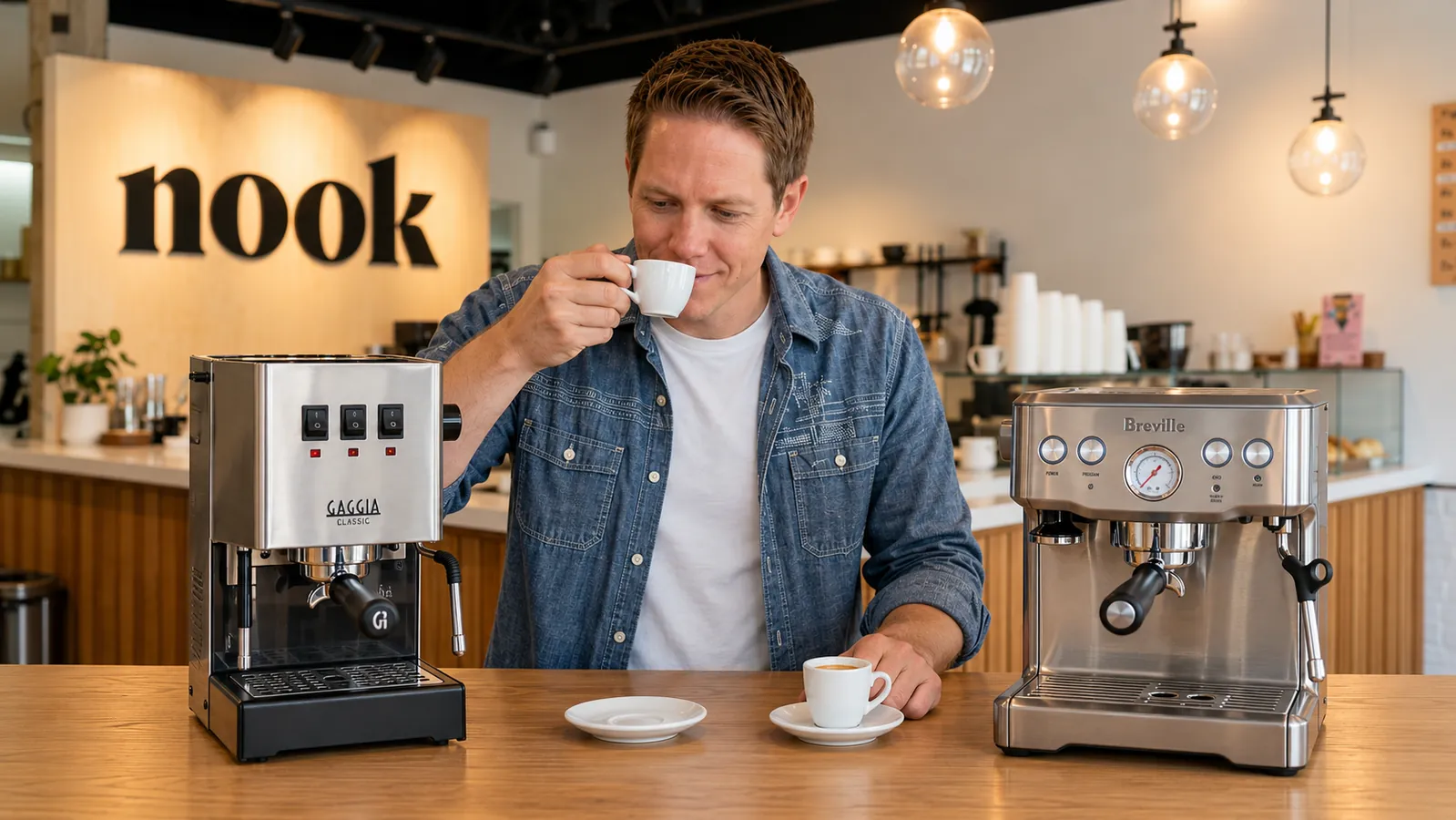
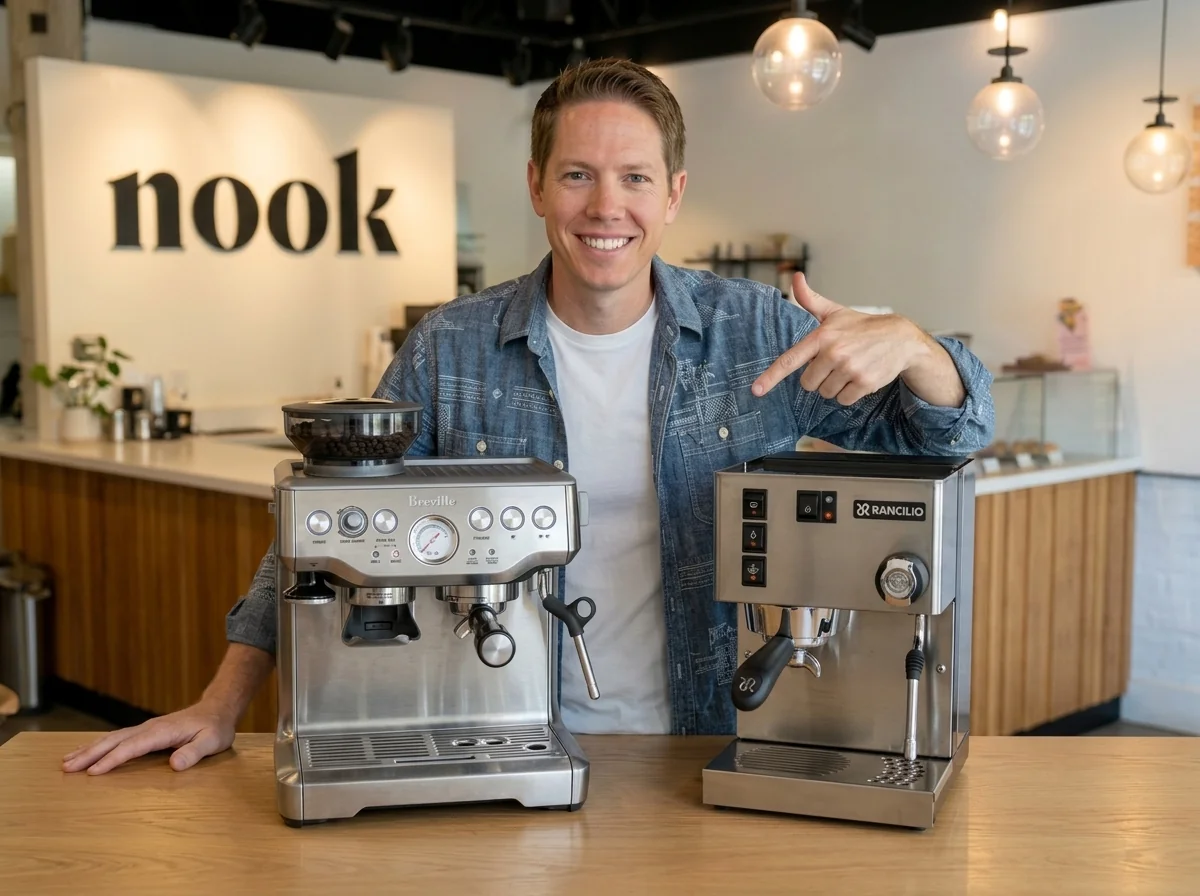
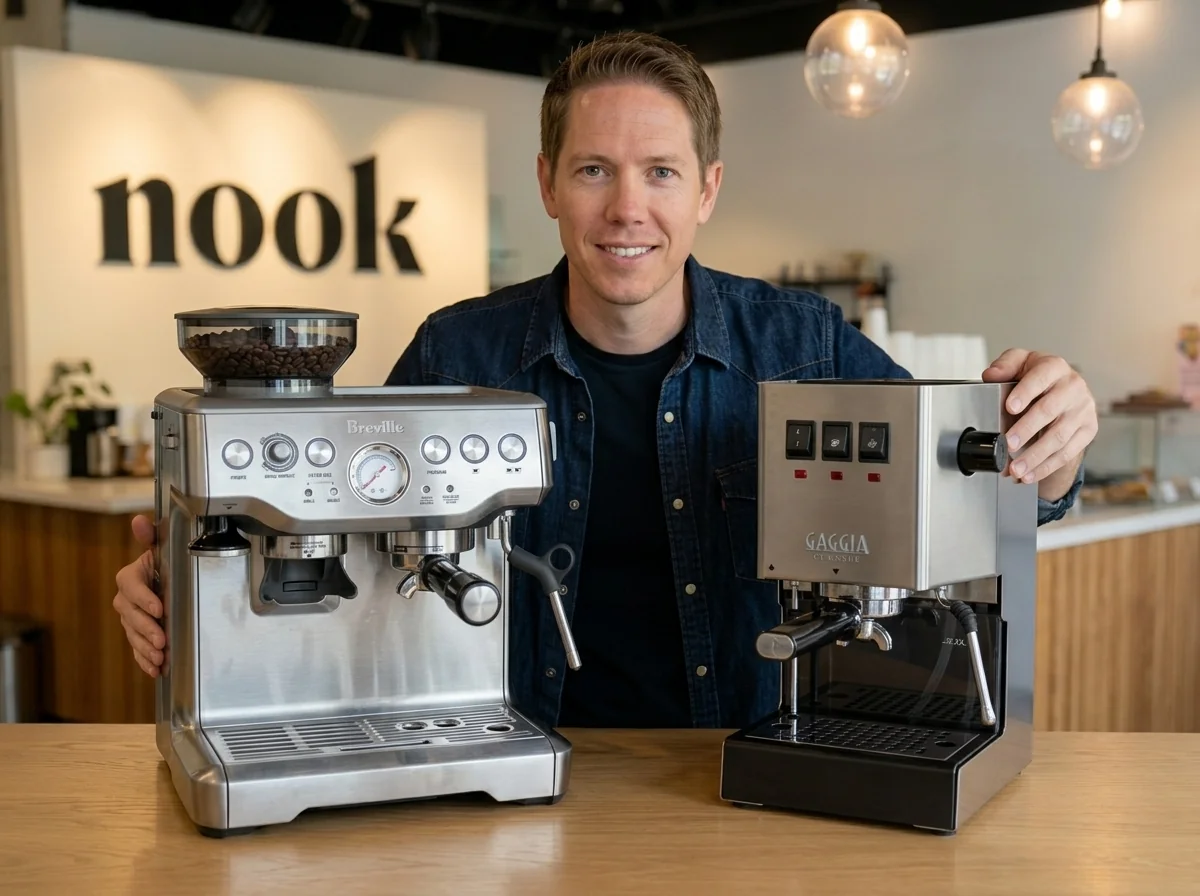
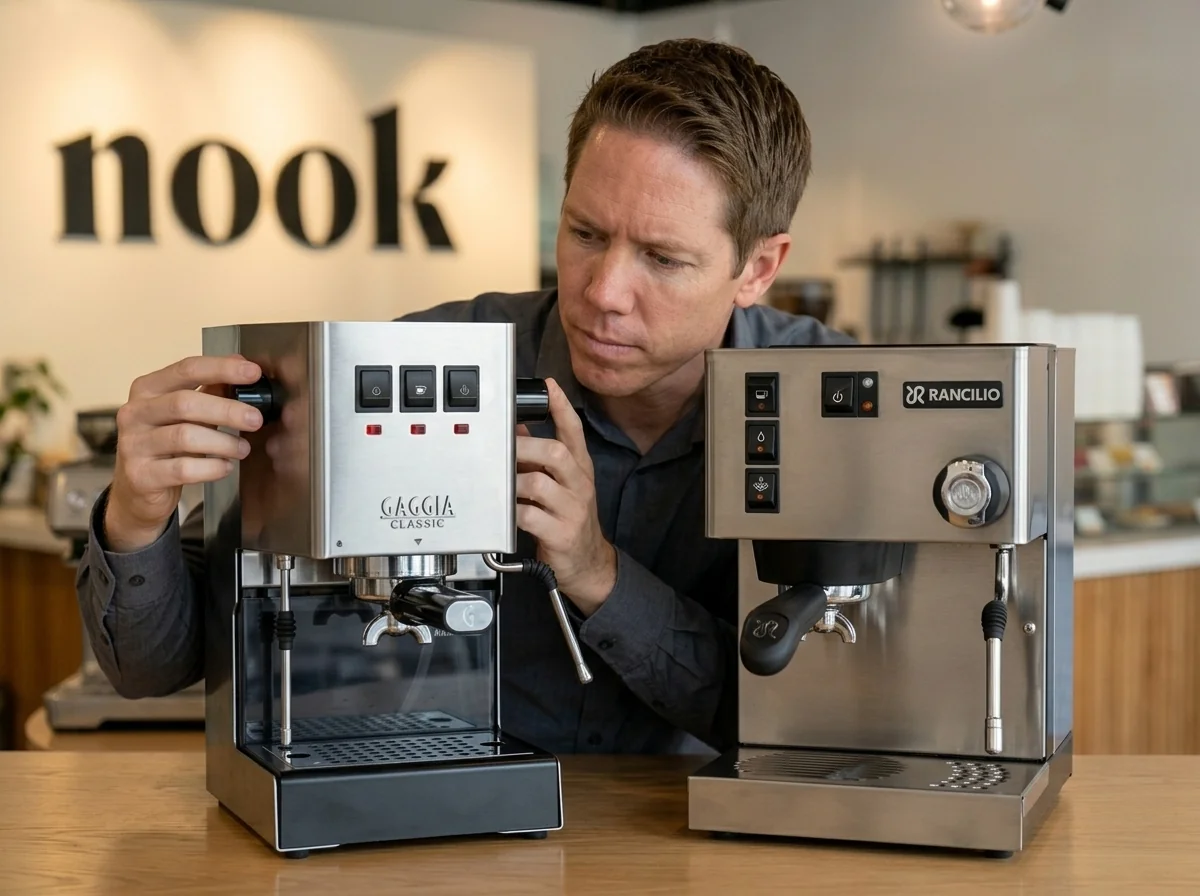
The Gaggia Classic and Rancilio Silvia are two of the most popular Italian home espresso machines. Here's how the current Gaggia Classic Evo Pro and Rancilio Silvia compare.
The appeal of a semi-automatic machine is the combination of control over the quality of the shot and the convenience of the features the machine regulates for you.
The Gaggia Classic and Rancilio Silvia are two of the best examples of Italian espresso engineering for the home. Both are classically designed single-boiler machines with commercial-style 58mm portafilters. Today's versions are the Gaggia Classic Evo Pro and the Rancilio Silvia (Silvia M).
“The Gaggia is the best value in Italian espresso. The Silvia is the one built to outlast your kitchen.”
The Final Shot: The Gaggia Classic Evo Pro is the better value: it costs roughly half as much and makes excellent espresso. The Rancilio Silvia is the better-built machine, with a heavier frame, a larger boiler and much stronger steam. Choose the Gaggia for value, the Silvia for longevity and milk drinks.
Both models are slim and compact and have so many features in common it can be tough to distinguish which machine is the better pick to elevate your espresso routine.
For this reason we’re taking them head to head to see if there’s one machine that has the edge when it comes to great tasting espresso with a great user experience.
Rancilio Silvia vs. Gaggia Classic Head to Head
Similarities
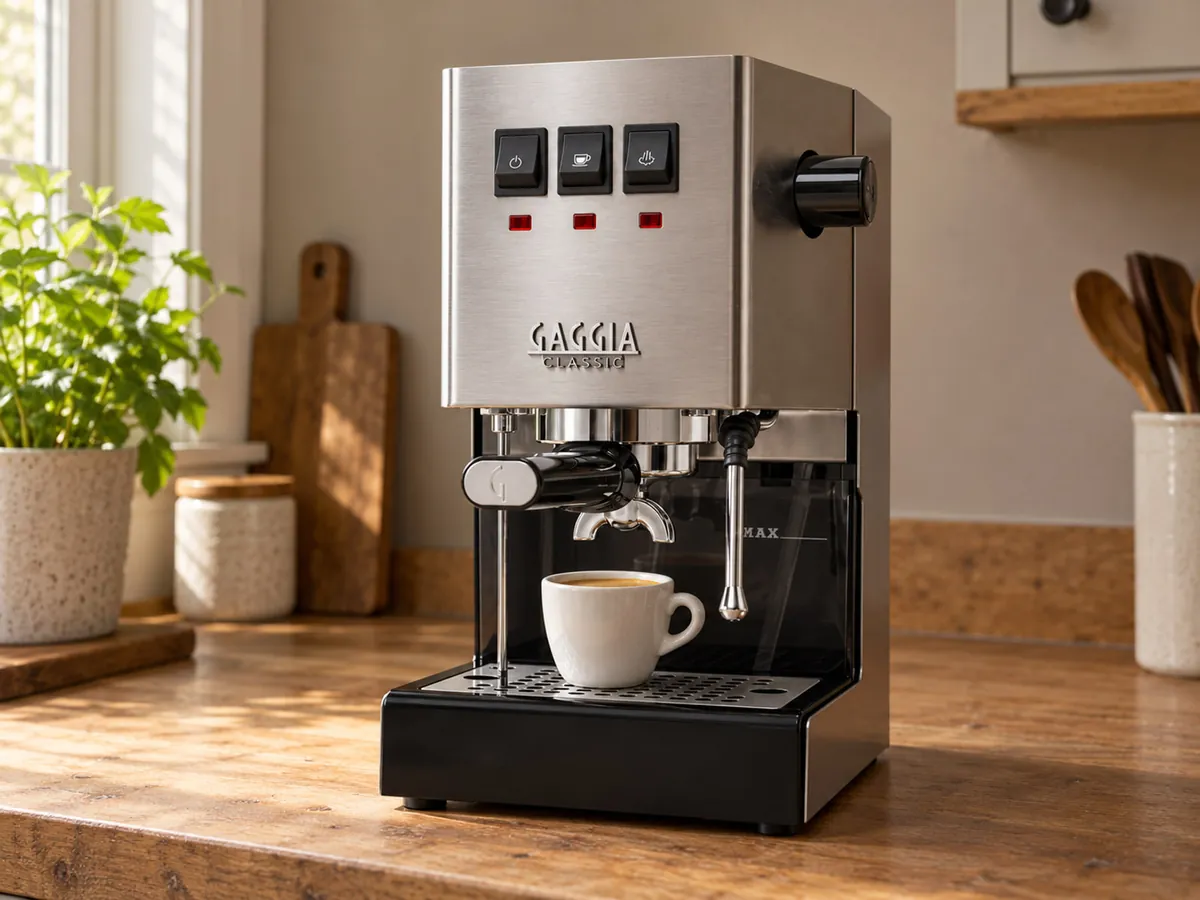
Both the Gaggia Classic Evo Pro and Rancilio Silvia are classic-looking machines with brushed stainless steel bodies. Both include single and double baskets; the Gaggia also includes pressurized baskets that are forgiving with pre-ground coffee.
The Rancilio Silvia and the Gaggia use a standard 58mm portafilter for their espresso baskets- these are just like the ones you’ll find in your favourite local coffee shop and are great for achieving a smooth, consistent coffee.
Both use vibratory pumps with an over-pressure valve that limits brew pressure. The Gaggia Classic Evo Pro ships set to 9 bars, the ideal for espresso.
Neither offer a built in grinder so that is an accessory you’ll need to purchase separately.
Both the Gaggia and Rancilio also come equipped with swiveling frothing wands for steaming milk for lattes and cappuccinos.
As we noted in the introduction, both these machines are semi-automatic. This means that you can control the flow of water through your espresso handle with the flick of a switch without worrying about setting temperatures for steaming milk or making coffee. You will still be hands on with grinding and tamping and monitoring extraction.
These are great machines to hone your barista skills at home, no matter if it’s espressos or lattes on the menu.
Shared Features:
- 58mm commercial-style portafilter
- 3-way solenoid valve for dry pucks
- Hot water from the steam wand
- Classic, stainless steel look
- Single and double shot filters included
- Semi-automatic
Differences
Build Quality
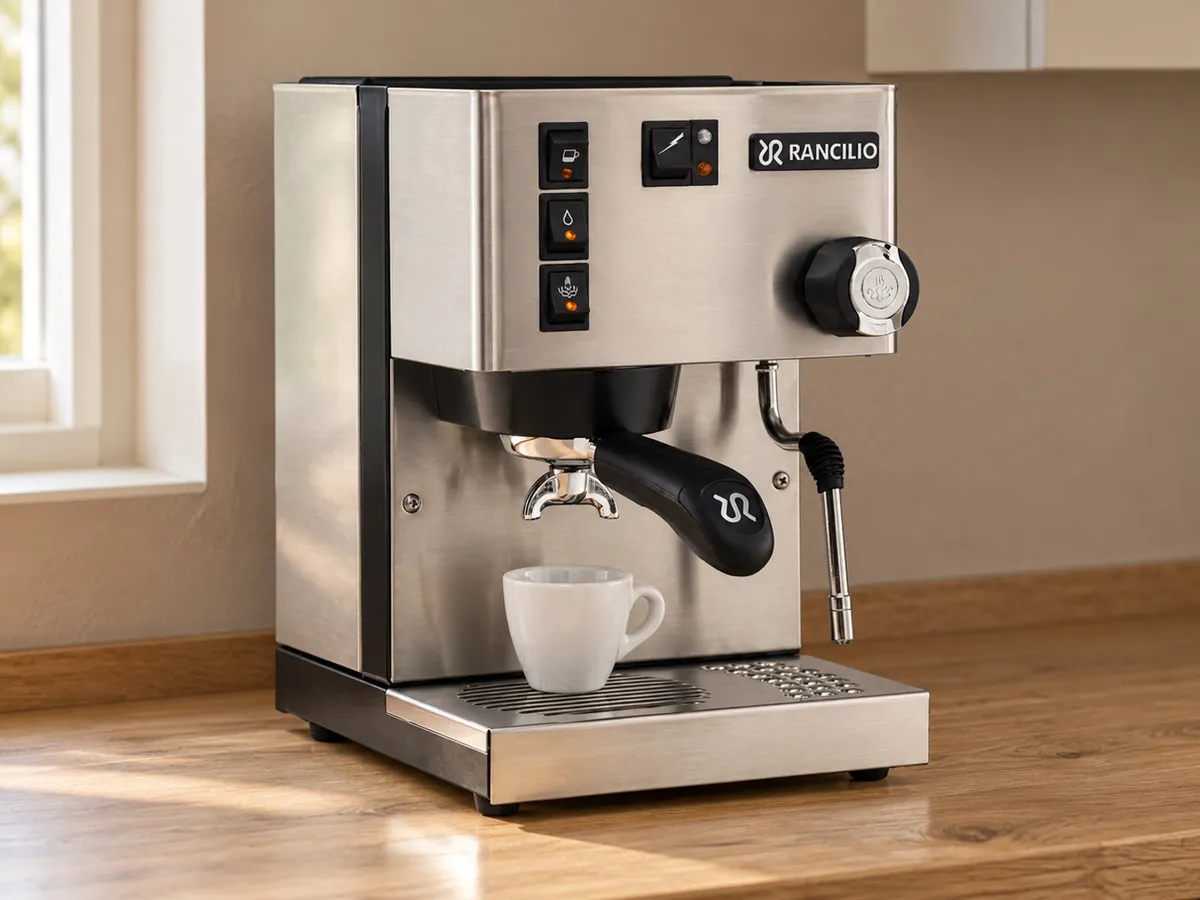
The Rancilio Silvia is the more commercial machine. It uses a heavy steel frame, a brass boiler and a group head and steam wand derived from Rancilio's commercial machines. Many Silvias run for 15 years or more with basic maintenance.
The Gaggia Classic Evo Pro is also well built, with a stainless steel housing and a commercial-style group, but it's lighter and uses a smaller aluminum boiler. It's durable and very serviceable, but not quite built to the Silvia's standard.
Boiler and Steam Power
The Silvia's larger boiler (about 12 ounces versus roughly 3.5 ounces on the Gaggia) gives it more stable brewing temperature and noticeably stronger, longer-lasting steam. If you make lots of lattes and cappuccinos, the Silvia steams faster and makes silkier microfoam. The Gaggia's commercial-style steam wand is a big improvement over older models, but it's less powerful.
Temperature Control
Neither machine has a PID controller from the factory, so both benefit from "temperature surfing" to time your shot. PID upgrade kits are popular for both machines. If you want PID out of the box, look at the Rancilio Silvia Pro X or the Breville Dual Boiler.
Water Tank
Both have generous tanks: about 72 ounces on the Gaggia and about 67 ounces on the Silvia, so neither needs constant refilling.
Size and Weight
The Gaggia is about 10 pounds lighter, at roughly 20 pounds versus 30 pounds for the Silvia. Both have compact footprints that fit under most kitchen cabinets.
Pods
The Gaggia's pressurized basket works with ESE (Easy Serving Espresso) pods out of the box. The Silvia needs an optional pod adapter kit.
Price
This is the biggest difference. The Gaggia Classic Evo Pro typically costs around half the price of the Rancilio Silvia, which makes it one of the best values in home espresso. Remember to budget for a quality espresso grinder with either machine.
Summary
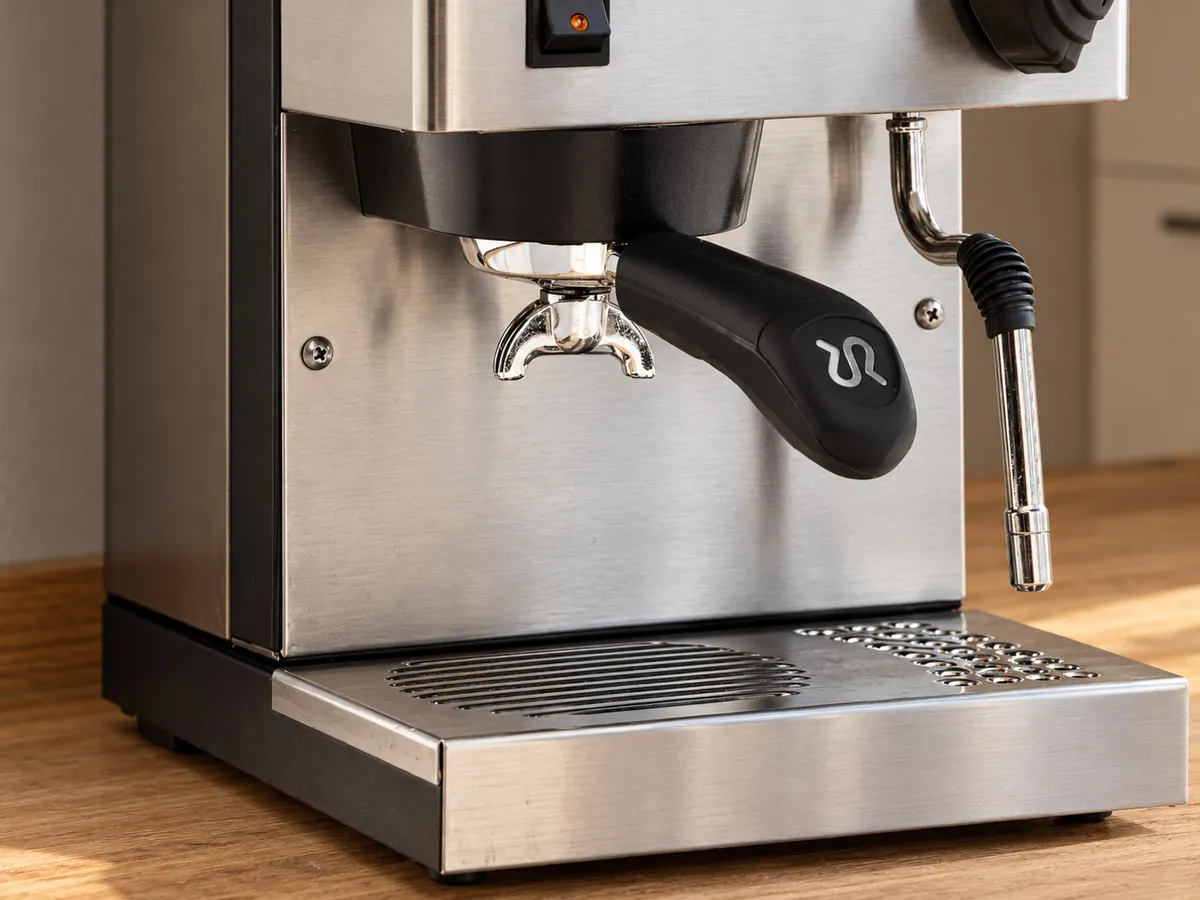
Both machines are excellent for learning real espresso skills at home. The Gaggia Classic Evo Pro offers outstanding value and makes espresso that rivals far more expensive machines. The Rancilio Silvia costs more but rewards you with heavier construction, a bigger boiler, stronger steam and a machine that can last for decades.
If budget matters most, buy the Gaggia. If you drink a lot of milk drinks or want a machine for the long haul, the Silvia is worth the extra money.
Related Reading

 Comparisons